About us
Introduction
Sexual and gender-based violence has increased in Tigray following the November 03, 2020 war against the people of Tigray. So far, more than 120,000 mothers, girls and children in Tigray have been exposed to sexual and gender-based violence. As a result, they have suffered extensive physical, health, mental, social, economic and religious crises. The enemies use this practice as a method of controlling, intimidating and degrading the community, and this practice is a deliberate tool of war. The perpetrators of this attack; It has involved armed groups, militias, military personnel, and even civilians who take advantage of the chaos and breakdown in the social order in times of war. Sadly, the perpetrators of sexual and gender-based violence during the armed conflict have gone unpunished. This results in cultural and community crisis, collapse of legal systems, limited access to justice; it further perpetuates the cycle of violence and reinforces gender-based discrimination. Sexual and gender-based aggression in war aims to damage and destabilize the morale of the community, which contributes to emotional fear, trauma and social disintegration. It can also have long-term psychological, social and economic consequences for the victims and the affected community. Although sexual and gender-based violence can be committed against women and men in war, women and girls are more vulnerable. This includes underage marriage, trafficking in women and other forms of abuse. Victims of assault can suffer from physical injuries, sexually transmitted infections, unwanted pregnancies, mental health problems, stigmatization and social exclusion. It also takes time for them to regain their trust and respect in the community. Preventing and responding to sexual and gender-based violence requires action at all levels such as international humanitarian law, promotion of gender equality, empowerment of women and girls, access to justice, and support services for victims of violence. Preventing and effectively responding to sexual and gender-based violence during and after conflict requires comprehensive dialogue and advocacy involving government agencies, humanitarian organizations, civil society and the international community.
Background
The Tigray Mothers Relief and Rehabilitation Association (TMRRA) Also called “ማሕበር ተራድኦ ምድሓን ኣዴታት ትግራይ(ማተምኣት)” is a non-profit organization established on May 19, 2023, to prevent and respond to sexual violence against women and girls in Tigray and to support victims of violence. In addition it is established with the intention of helping women who have survived the crisis and possessed a healed psyche, improved their livelihoods and participated significantly in the development of Tigray in an organized manner. As its primary goal the association will will ensure the healing of women, girls and children of Tigray who have been victims of sexual and gender-based violence during the two years and above #Tigaraywar without any discrimination of religion, age, politics, race and color and human. The charity was established with the intention of helping women who have survived the crisis and possessed a healed psyche, improved their livelihoods and participated significantly in the development of Tigray in an organized manner. The conflict in North part of Ethiopia, Tigray Region, has had a severe impact on women and girls. Violence against women and girls in Tigray has become more common, and acceptable, and has taken on more brutal forms. In the span of 2 years since the start in November 2020, there have been numerous reports of women, men, boys, and girls who have lost their lives At the hands of their intimate partners, armed forces due to insurgents in the armed conflict of Tigray and Ethiopia and Eritrea. During these years, Tigray has been and continues to experience violence in all its forms which leaves these women and girls in trauma and frustration as some of them end up in early marriages and others in sex hawking to meet their needs. This crisis has drastically affected the lives of women and their children leaving them homeless and no means of subsistence as they have fled their homes. Lack of economic empowerment during these tough times has been proven to be a huge barrier to women breaking their silence from gender-based violent homes in which they have found themselves. This has turned some of them into single mothers earlier than expected due to an increase in rape resulting in unplanned pregnancies and deaths. These women are sometimes separated from their partners and have to raise their children alone, they feel stuck and frustrated and, in this case, involve in very illegal jobs just to meet the needs of their family. These women who are forced into early marriages face sexual exploitation, physical assault, and emotional and psychological abuse sometimes leaving these women and girls getting suicidal thoughts or committing suicide. It is said that “an idle mind is the devil’s workshop” therefore, there is a need to empower these women in vocational skills specifically in their assigned IGA. This is important to reduce the risk of women facing GBV, trauma, domestic violence and improve their well-being and increase economic growth.
Why TMRRA Was Established
Our association is founded on these urgent truths:
- Sexual violence has created widespread health, social, and psychological crises in Tigray.
- The scale of abuse is so severe it threatens community stability.
- Violence has exposed women and children to serious diseases.
- Survivors struggle to meet basic needs and access medical care.
- Harmful social stigma continues to isolate victims.
- A unified, sustained awareness campaign is essential for change.
- Tigray’s growth depends on restoring the dignity and strength of its women and girls.
- Collective responsibility is vital: every Tigrayan and ally must aid in recovery.
The Need for Immediate Action
Rescuing and rehabilitating Tigray’s women and girls is an urgent matter that cannot wait. It requires honest dialogue, sustained collaboration, and the active involvement of scholars, professionals, religious leaders, elders, the Tigrayan diaspora, media, and international allies.
Our commitment is clear: TMRRA will ensure that survivors find healing, justice, and acceptance — regardless of religion, age, politics, race, or color. We believe:
“Saving the mothers of Tigray means saving Tigray and its people.”
TMRRA’s Vision
We envision a future where women, girls, and children who have survived sexual violence rise above economic, social, and psychological crises — thriving in livelihood, education, and personal empowerment.
TMRRA’s Goals
TMRRA will:
- Lead efforts to heal and rehabilitate victims of SGBV.
- Empower survivors to overcome trauma and mentor others.
- Protect the rights and safety of vulnerable women and girls.
- Create job opportunities and economic pathways for survivors.
- Build psychological resilience and awareness among women and girls.
- Enhance community awareness and engagement to prevent and respond to Sexual and Gender-Based Violence (SGBV) through sustained education, advocacy, and behavior change initiatives
- Advocate for international justice and social acceptance for survivors, under the banner #Justice4TigraysWomenAndGirls.
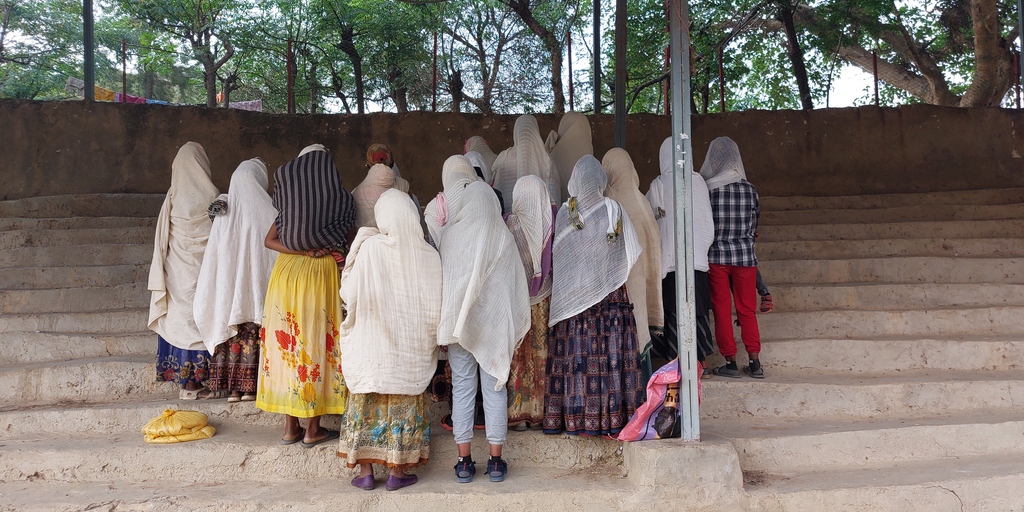
The Tigray Mothers Relief and Rehabilitation Association (TMRRA/ማተምኣት) is a legally registered indigenous NGO (License: 415/2015) dedicated to the holistic recovery of women survivors of conflict. Established in May 2023 by Tigrayan professionals and diaspora members, TMRRA was born from the urgent need to address the deep clinical, psychological, and economic scars left by the Tigray war.
We are more than a relief agency; we are a specialized association bridging the gap between humanitarian aid and developmental sovereignty. Our leadership combines technical engineering logic with clinical medical expertise to build a resilient future for the mothers who are the backbone of Tigray.
TMRRA operationalizes the Humanitarian-Development-Peace (HDP) Nexus through four strategic pillars:
- Clinical Excellence: Life-saving cervical cancer screenings and reproductive health care for CRSV survivors.
- Trauma Healing: Intensive psychosocial support to restore human agency and mental resilience.
- Economic Graduation: Transitioning households from aid-dependency to micro-enterprise ownership.
- Community Advocacy: Dismantling social stigma and fostering cohesion through community-led awareness.
Our flagship intervention is the 60k Livelihood Graduation Model. Unlike traditional aid, we provide an inflation-adjusted capital injection of 85,000 ETB integrated with:
- 15 Days of Technical Training: Business management and livestock husbandry skills.
- 6-Month Blocked Resilience Fund: Ensuring survivors have emergency collateral and credit-worthiness at DECSI.
- Implementation Research: In partnership with Mekelle University, we analyze our field data to generate scientific evidence for scalable recovery models in sub-Saharan Africa.
TMRRA specializes in “last-mile” delivery in hard-to-reach and border zones. Our current 4-year roadmap (2017-2020 E.C.) targets 320 survivors across 13 Priority Woredas:
- Active Sites: Irob, Hagereselam, Slawa, Tahtay Adiyabo, Ahferom, and Geralta.
Expansion Zones: Bora, Atsbi, Adet, Egela, and more.
We maintain a physical presence in these areas through our Woreda Steering Committees, ensuring deep local trust and security
TMRRA utilizes an agile structure designed to minimize administrative costs (capped at 15-20%) while maximizing field impact:
- Core Management: Led by Engineer Zinabu Solomon, ensuring system efficiency and fiduciary integrity.
- Technical Volunteer Corps: A “Brain Trust” of PhD researchers from Mekelle University and Senior Nurses from Ayder Hospital.
- Field Officers: Frontline staff providing remote technical mentorship and milestone-based monitoring.
TMRRA believes in the power of partnership. We work in close coordination with:
- Government: Tigray Regional Bureaus of Health, Women’s Affairs, and Justice.
- Academic: Mekelle University, College of Health Sciences (Scientific Lead).
- Diaspora: North London Enfield Tegaru Association and individual global philanthropists
GOVERNANCE & LEADERSHIP: OUR PILLARS OF ACCOUNTABILITY
TMRRA is built on a multi-layered governance framework that ensures institutional independence, technical excellence, and transparent financial stewardship.
1. The Governance Hierarchy
General Assembly: The supreme authority of TMRRA, representing the collective voice and voting power of all registered members.
Independent Oversight: To ensure 100% compliance with Tigray Regional and Ethiopian Federal laws, TMRRA is monitored by External Auditors, a dedicated Control Committee, and Legal Counsel.
Executive Board (Board of Directors): Providing strategic direction, policy approval, and rigorous fiduciary monitoring.
2. Our Executive Board Leadership
Dr. Tesfaye G/her G/hiwot — Chairperson
Strategic lead overseeing organizational growth and regional stakeholder alignment.
Dr. Mulu Adere — Head of Finance & Property Management
Ensuring absolute transparency, managing our Sage 50 systems, and safeguarding donor resources.
G/Amlak Gidey — Head of Capacity Building & Recovery
Technical oversight of TMRRA’s rehabilitation protocols and human capital development.
3. Agile Management & Technical Implementation
TMRRA utilizes a “Lean HQ” structure designed to minimize administrative costs (capped at 15-20%) to ensure that the maximum amount of funding reaches the survivors:
Core Management: Led by Engineer Zinabu Solomon (General Manager), ensuring operational efficiency, project logic, and fiduciary integrity.
Technical Volunteer Corps: Our unique “Brain Trust” consisting of PhD researchers from Mekelle University and Senior Nurses from Ayder Hospital who provide consultant-level quality in clinical and economic programs.
Field Operations: Frontline staff and Woreda Steering Committees providing remote technical mentorship and community-led monitoring in hard-to-reach zones.
TMRRA maintains “Audit-Ready” systems that satisfy international donor standards:
- Sage 50 (Peachtree): All financial transactions are recorded digitally with an unalterable audit trail.
- Three-Signature Mandate: All fund movements require joint authorization from the GM and Board.
- Safeguarding (PSEA): Zero-tolerance for abuse. Every staff member and volunteer is legally bound by our signed Code of Conduct.
- External Audits: TMRRA publishes annual unqualified (clean) audit reports to maintain donor confidence.